World of Anterra Water, Lighting and Visual Effects
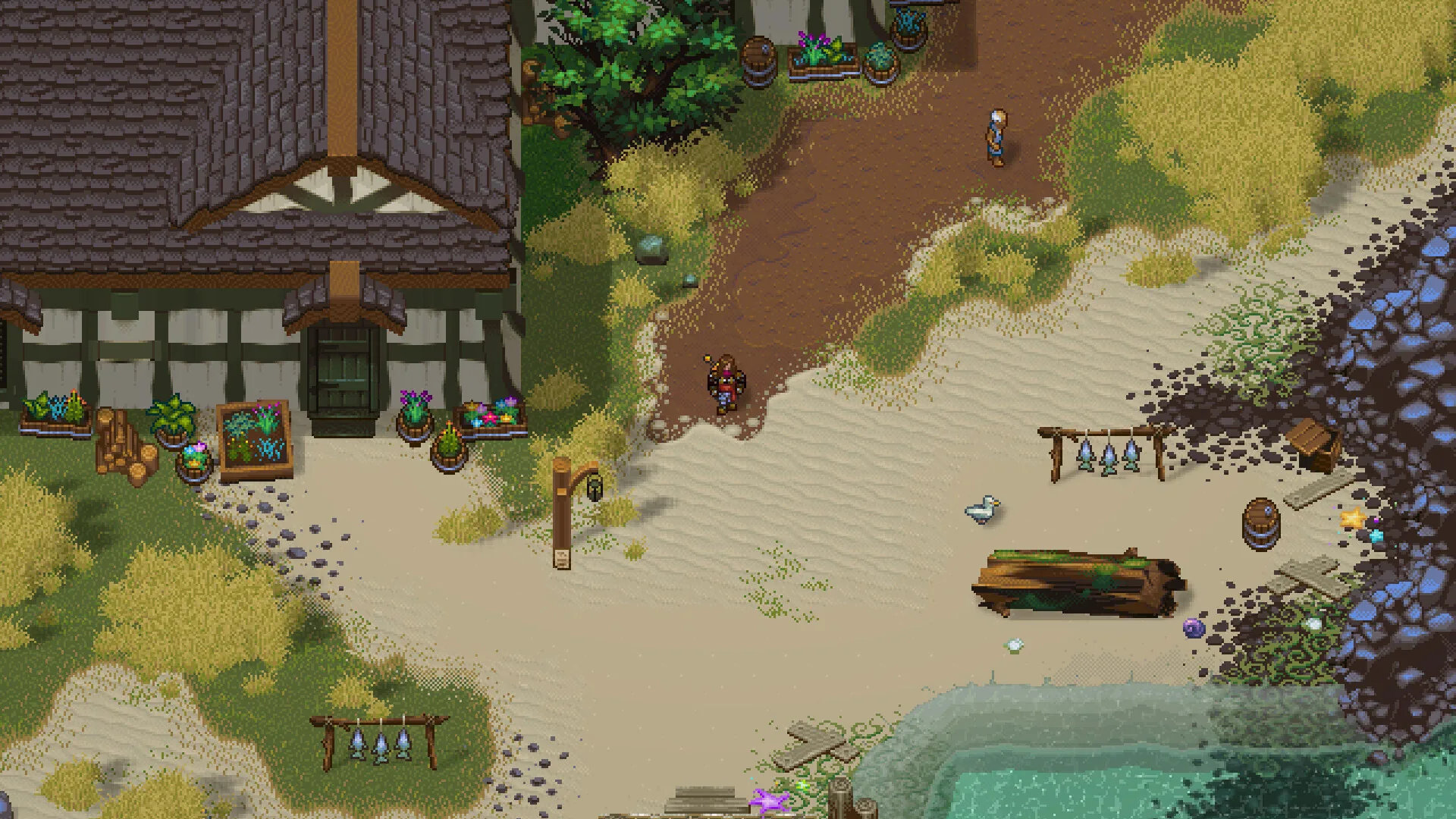
World of Anterra combines hand-animated sprites with shader-driven water, a real-time lighting engine, dynamic weather and day-night cycles.
How World of Anterra Handles Water and Light
World of Anterra renders its water with shaders and builds its visuals on a custom real-time lighting engine, then layers hand-animated sprites on top of procedural effects. According to an official Steam announcement detailing the game's water, shaders are small programs that run on the GPU and are used to turn environments into more convincing ones; the same post describes shaders as originally created for shadows but now used for much more, including water. The official store description separately lists a custom real-time lighting engine, water shaders, dynamic weather, day-night cycles, and special effects that combine hand-animated sprites with procedural effects.
Water: Depth, Transparency and Refraction
The official water feature post, published on Steam, explains that water effects are built from many layers, and that how much you can see through water depends on its depth and type - you cannot see through bog water the way you can through clean ocean water. Anything under the water appears distorted, with pixels moving to reflect how light bends through water. The same announcement notes that both shallow water and deep water environments exist, and that some resources, creatures and enemies can only be found in or near water, alongside fishing and sailing.
Movement in water is also affected: the announcement states that creatures move more slowly based on water depth, unless they are water creatures.
Lighting, Shadows and Height Maps
The official store description credits a custom real-time lighting engine alongside dynamic weather and day-night cycles. A separate official Steam post about the team's tools explains how shadows work with flat 2D art: a height map is a visual representation of how far a pixel should be from the ground, giving 2D assets 3D information so shadows know how far to "climb up" before wrapping around, and so objects clip and overlap correctly - the example given is grass properly obscuring the player.
That post also describes the Shadow Offset Map Editor, an in-house tool created to generate height maps for game assets, because doing so by hand could take a designer or artist hours per asset.
Sprites Plus Procedural Effects
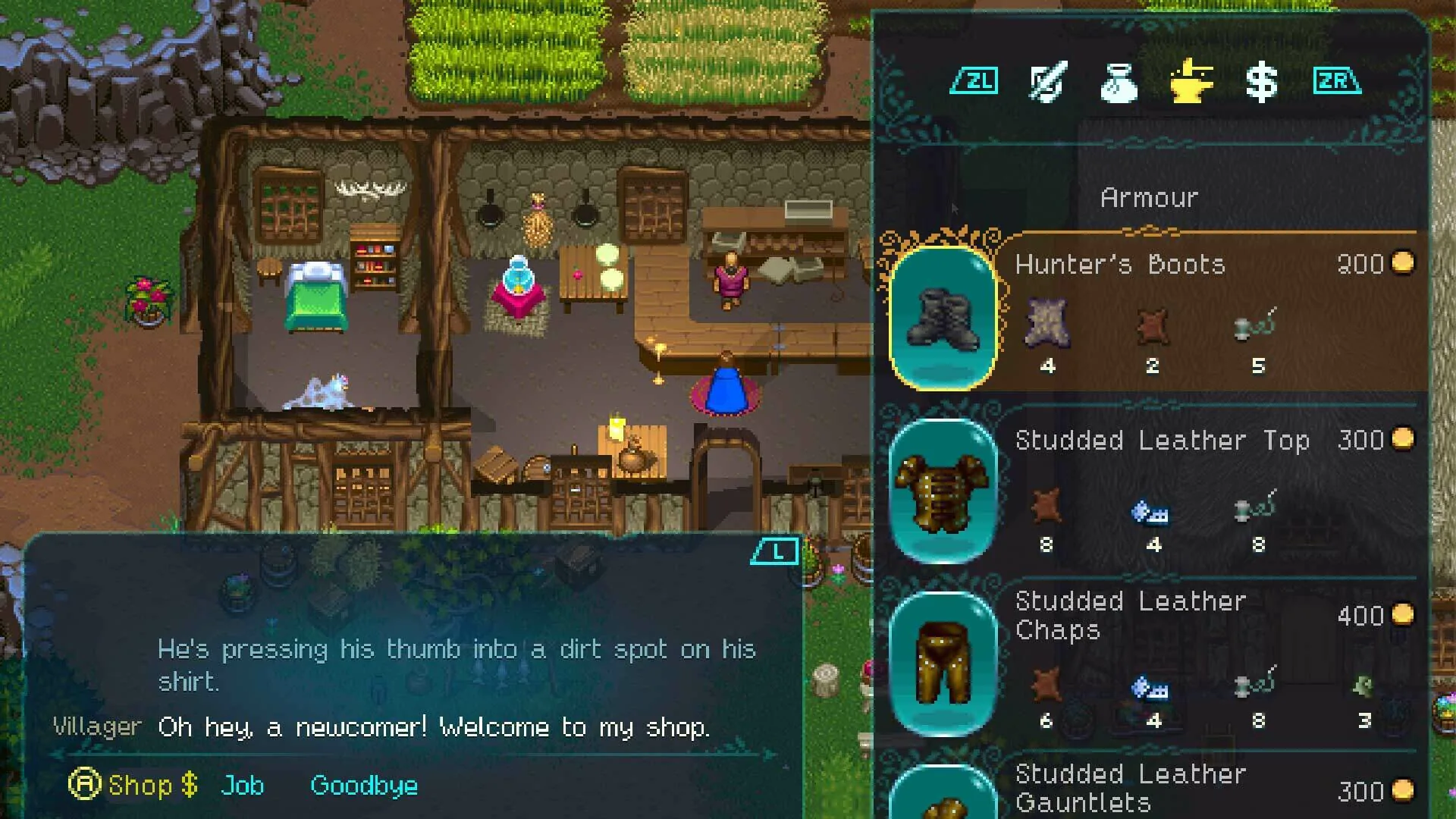
The store description says the game blends hand-animated assets with player customization, and that a custom animation layering system applies to party members, NPCs and creatures. An official post on explosions describes them as made by combining layers of hand-animated sprites with procedural effects, and credits Stephane, Game Director, for the note. A related post on palette swapping explains that the engine can swap all the colours of an asset for new ones, which the team says extends the asset library without requiring the art team to redo every asset.
What Is Not Officially Documented
The specific technical implementation of the shaders, the number of layers used in any given effect, and any numeric values for transparency, lighting or slowdown are not officially documented in the material available. The same applies to whether lighting or weather change gameplay - nothing in the official material describes those systems as mechanical rather than visual. The game is listed on Steam as releasing in 2026, and further detail may appear closer to launch.